📑 Table of Contents ▶
- Essential Elements of Kimchi: What You Need to Know
- Fundamentals
- Preparation/Setup
- Directions
- Techniques for Crafting Exceptional Kimchi
- Technique
- Tips/Tricks
- Perfecting Your Kimchi Results
- Perfecting Results
- Troubleshooting/Variations
- Serving and Storing Your Kimchi with Style
- Serving/Presentation
- Pairings/Storage
- Easy & Delicious Kimchi
- Have you tried this recipe?
Easy & Delicious Kimchi
Preparing Korean kimchi ranks among the most joy-filled experiences in my kitchen. I vividly recall my first attempt—armed with a crisp, green head of Napa cabbage, I dove into the vibrant world of fermentation, mixing spices with a sense of adventure. The air filled with aromas of garlic and ginger, signaling magic was about to happen.
Kimchi isn’t only food; it’s a cultural cornerstone steeped in history. The process of making it connects me to generations past, reminding me that some joys in life are timeless. Each crunch of the cabbage and every sprinkle of gochugaru brings satisfaction and nostalgia.
⚡ Smart Kitchen Tools Every Home Cook Swears By

- Pure aluminum
- Durable enough for everyday cooking
- Made in the USA with quality

- 7 cooking functions in one compact cooker
- 3-quart size ideal for couples or small meals
- Up to 70% faster than traditional cooking

- 3 sizes for every recipe
- Pre-seasoned & durable cast iron
- Oven & grill ready
There’s something exquisite about witnessing humble ingredients transform into a probiotic treasure. This homemade kimchi breathes life into countless dishes, yet stands strong on its own. With just a few simple steps, you can join the ranks of home cooks who cherish this delightful culinary adventure.
Understanding kimchi’s fundamentals allows you to personalize it to your taste, inviting in creativity and character. This recipe empowers anyone to create their own batch and share in the joy that kimchi brings.
Essential Elements of Kimchi: What You Need to Know
Fundamentals
Kimchi thrives on balance. At its core lies the interplay of textures and flavors. When crafting kimchi, start with a fresh medium head of Napa cabbage. The cabbage’s crunch acts as the base for this delightful dish. It’s essential to choose a head that feels firm and thick, as it provides a satisfying bite.
Salting is a pivotal step in kimchi-making. The salt draws out moisture from the cabbage, preparing it for the fermentation process. By using iodine-free sea salt or kosher salt, you set the stage for optimal fermentation without unnecessary additives. Aim for 1/4 cup of salt to enhance the natural flavor of your cabbage, ensuring each bite bursts with taste.
Preparation/Setup
Preparation is vital for the perfect kimchi. Begin by cutting your Napa cabbage into quarters lengthwise. From there, chop each quarter into smaller pieces, ensuring that they will salt evenly. Rinse the pieces thoroughly under cold, filtered or distilled water.
After rinsing, soak the cut cabbage in a solution of salt and water, weighing it down to ensure even salting. Allow it to sit for about an hour, giving it that essential crunch. The key is to ensure that every leaf feels the love of the salt. Don’t rush this step. While the cabbage sits, you can start gathering the rest of your ingredients, which makes the next steps even smoother.
Ingredients
Gather the following ingredients for your kimchi preparation:
- 1 Medium Head Napa Cabbage
- 1/4 cup Iodine-free Sea Salt or Kosher Salt
- Water (Distilled or filtered)
- 1 tbsp Grated Garlic
- 1 tsp Grated Fresh Ginger
- 1 tsp Granulated Sugar
- 2 tbsp Fish Sauce or Salted Shrimp Paste
- 1 to 5 tbsp Korean Red Pepper Flakes (Gochugaru)
- 8 oz Korean Radish or Daikon Radish
- 4 Medium Scallions (Cut into 1-inch pieces)
To achieve optimal flavor, adjustments in seasoning can help tailor the recipe to your palate.
Directions
- Prepare the Napa cabbage by cutting it into quarters and then chopping into smaller pieces.
- Create a saltwater solution, soaking the cabbage for about an hour.
- After salting, rinse the cabbage thoroughly and drain in a colander.
- In a mixing bowl, combine grated garlic, fresh ginger, granulated sugar, fish sauce (or salted shrimp paste), and Korean red pepper flakes to create a delicious kimchi paste. Adjust the amount of gochugaru based on your spice preference.
- Finally, toss in the Korean radish (or daikon radish) and scallions, mixing everything thoroughly.
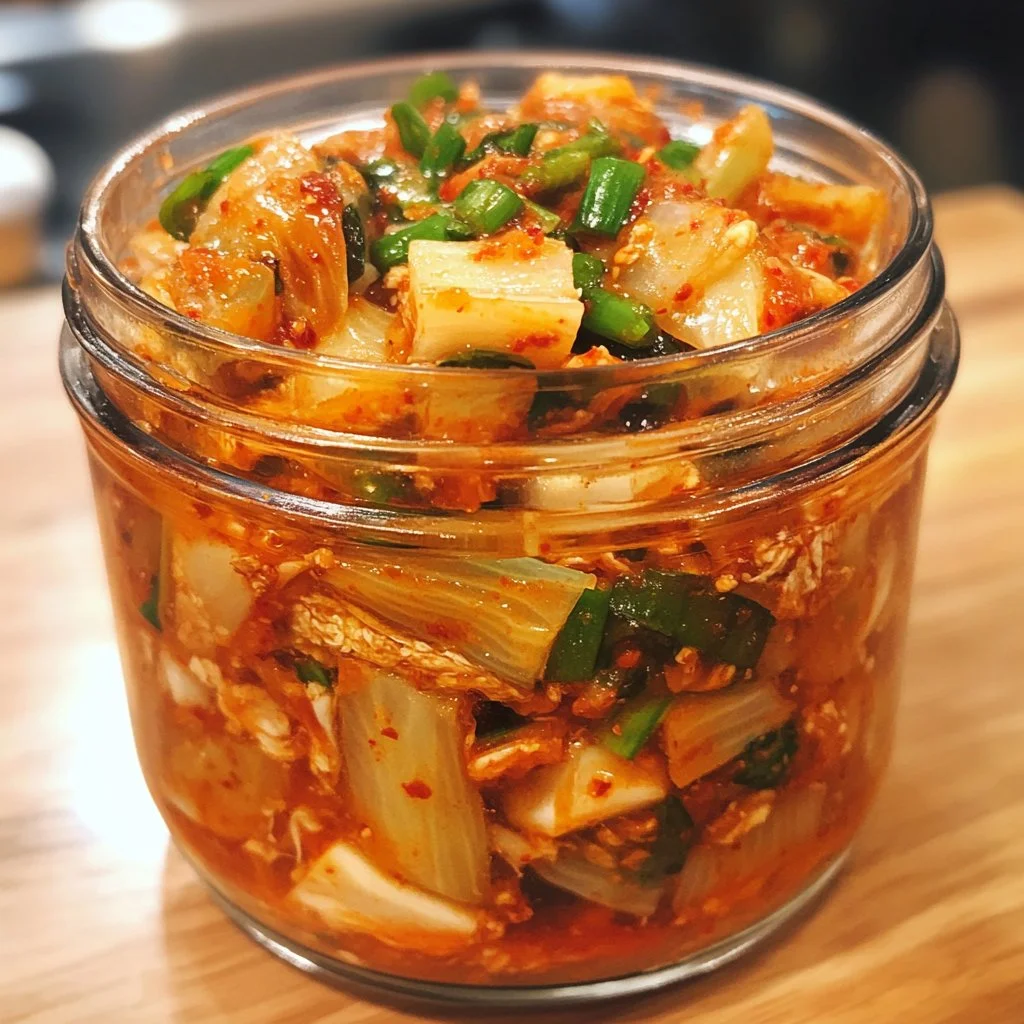
- Pack this vibrant mixture into a jar, ensuring it’s tightly packed.
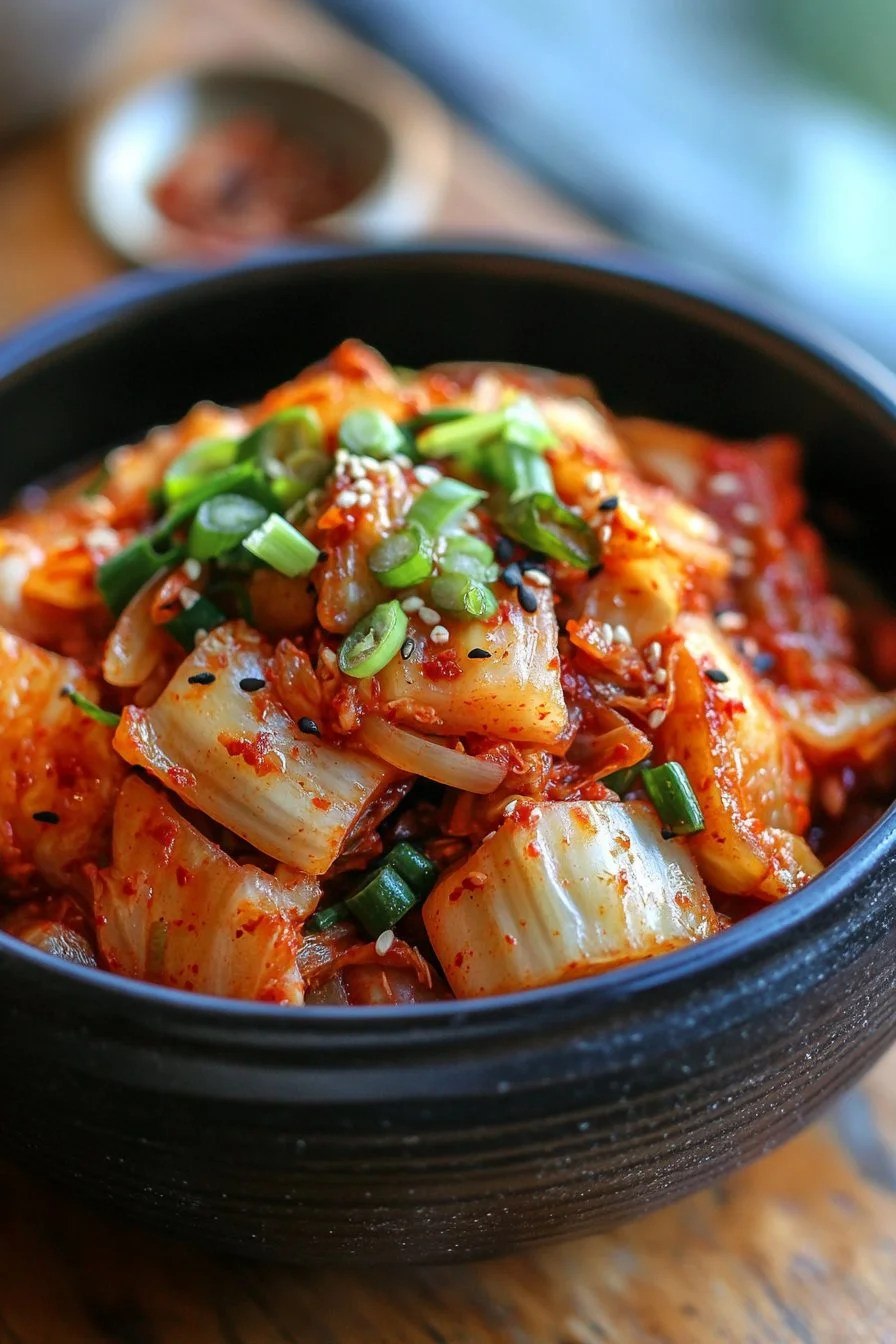

- Let it ferment at room temperature for 1 to 3 days, depending on your preference for tanginess.
Techniques for Crafting Exceptional Kimchi
Technique
Developing your skills in kimchi-making opens up culinary new worlds. The fermentation process is central to creating kimchi with layers of flavor. Ensure you use high-quality ingredients, as the vibrancy of each component shines through.
Use a clean, airtight jar to store your kimchi. It’s equally important to leave some space at the top of the jar to allow gases to expand during fermentation. Keep your kimchi in a cool, dark area initially, and once it begins bubbling, move it to the refrigerator to slow down the fermentation process.
🥗 Fresh, Fast & Foolproof — Upgrades You'll Use Tonight

- Zoodles in seconds
- Heavy-duty, 10 sharp blades
- Keto, paleo & gluten-free friendly

- Meals in ~30 minutes
- 3-Qt — perfect for 1–3 people
- Pressure cook, sauté, steam & more

- Phone alerts & live temp graph
- Hands-off monitoring for smokers
- Perfect doneness, every time
Tips/Tricks
- Taste frequently: During the fermentation, check the flavor daily. Kimchi reaches its peak when it suits your taste buds.
- Alter spice levels: Feel free to adjust the gochugaru. More will heighten heat, while less creates a milder flavor profile.
- Explore variations: For a twist, consider adding vegetables like carrots or cucumbers to your mixture.
Perfecting Your Kimchi Results
Perfecting Results
Getting your kimchi perfect can take a few tries, but the joy of crafting it makes every attempt worthwhile. Monitor the environment where you ferment. A warmer room speeds up fermentation, while cooler spaces prolong it.
Observe the bubbles forming; they signal that fermentation is happening. After a couple of days, your kimchi will have developed a pleasant tang. Store it in the fridge to halt the fermentation process, serving it chilled for a refreshing kick.
Troubleshooting/Variations
If your kimchi seems too salty, it might be helpful to rinse the cabbage well before mixing in other ingredients. On the flip side, if it lacks flavor, a touch of fish sauce can elevate overall taste.
Don’t hesitate to experiment. The interest in various textures can introduce a new twist, whether by incorporating bean sprouts or a blend of different veggies, each adding unique flavors to the mix.
Serving and Storing Your Kimchi with Style
Serving/Presentation
Serving kimchi requires a touch of creativity. Its vibrant color and unexpected crunch enhance any plate. Serve it chilled in small bowls alongside rice or as part of a larger meal. Kimchi also shines as a topping for tacos or sandwiches, enriching your culinary experience.
Utilizing it in salads or grain bowls adds an exciting twist, and you can even use it as a rich filling for dumplings. The adaptable nature of this condiment allows for endless possibilities and personalization.
Pairings/Storage
Kimchi pairs beautifully with various dishes. Enjoy it with grilled vegetables or mix it into your favorite grain bowls. Storing your kimchi is straightforward. Transfer it to an airtight container and keep it in the refrigerator to preserve its flavor. Proper storage can extend its freshness for several weeks, but it will continue fermenting, developing a more robust flavor over time.
You can also freeze it, but aim to consume it fresh to appreciate its crunch and flavor fully. With each bite of homemade kimchi, you celebrate not just a dish but a beautiful tradition that brings joy to your kitchen.
By embracing these steps, you’ll soon find yourself creating batches of kimchi that encapsulate everything you love about cooking. The shared experience of waiting and anticipating those tangy, spicy bites adds a layer of excitement, making it a truly delightful endeavor. Enjoy every aspect, from preparation to savoring the final product.
Print
Easy & Delicious Kimchi
- Total Time: 3 days
- Yield: 4 servings 1x
- Diet: Vegan
Description
Experience the joy of making homemade kimchi, a delicious and probiotic-rich dish that embodies a cultural treasure.
Ingredients
- 1 Medium Head Napa Cabbage
- 1/4 cup Iodine-free Sea Salt or Kosher Salt
- Water (Distilled or filtered)
- 1 tbsp Grated Garlic
- 1 tsp Grated Fresh Ginger
- 1 tsp Granulated Sugar
- 2 tbsp Fish Sauce or Salted Shrimp Paste
- 1 to 5 tbsp Korean Red Pepper Flakes (Gochugaru)
- 8 oz Korean Radish or Daikon Radish
- 4 Medium Scallions (Cut into 1-inch pieces)
Instructions
- Prepare the Napa cabbage by cutting it into quarters and then chopping into smaller pieces.
- Create a saltwater solution, soaking the cabbage for about an hour.
- Rinse the cabbage thoroughly and drain in a colander.
- Combine grated garlic, fresh ginger, granulated sugar, fish sauce (or salted shrimp paste), and Korean red pepper flakes in a mixing bowl.
- Toss in the Korean radish (or daikon radish) and scallions, mixing everything thoroughly.
- Pack this vibrant mixture into a jar, ensuring it’s tightly packed.
- Let it ferment at room temperature for 1 to 3 days, depending on your preference for tanginess.
Notes
Taste frequently during fermentation to achieve the desired flavor. Experiment with vegetables for variations.
- Prep Time: 60 minutes
- Cook Time: 0 minutes
- Category: Condiment
- Method: Fermentation
- Cuisine: Korean
Nutrition
- Serving Size: 1 serving
- Calories: 50
- Sugar: 2g
- Sodium: 600mg
- Fat: 1g
- Saturated Fat: 0g
- Unsaturated Fat: 1g
- Trans Fat: 0g
- Carbohydrates: 10g
- Fiber: 2g
- Protein: 2g
- Cholesterol: 0mg
Keywords: kimchi, fermentation, Korean food, probiotic, vegan

🍳 Precision Meets Passion — Tools Chefs Trust Daily

- Grams & ounces — precise to 1g
- Perfect for baking & keto tracking
- Sleek stainless steel design

- German stainless precision
- Razor-sharp & dishwasher-safe
- Elegant wood block organizer

- Premium Stainless Steel Build
- Easy to Clean & Dishwasher Safe
- A Must-Have Kitchen Tool