➤ Table of Contents
Hi, I’m Emily, and if you’ve ever danced around your kitchen to the smell of something bubbling on the stove, then we’re already kindred spirits. I created Luscious Recipes in 2023 after years of experimenting with flavors from around the world. My passion for cooking began with my grandmother, flour in my hair and a grin I couldn’t wipe off. Today, I’m thrilled to share my take on venison pho – a rustic, game-inspired version of Vietnam’s beloved noodle soup that combines the rich flavors of wild venison with aromatic spices for a truly unforgettable meal.
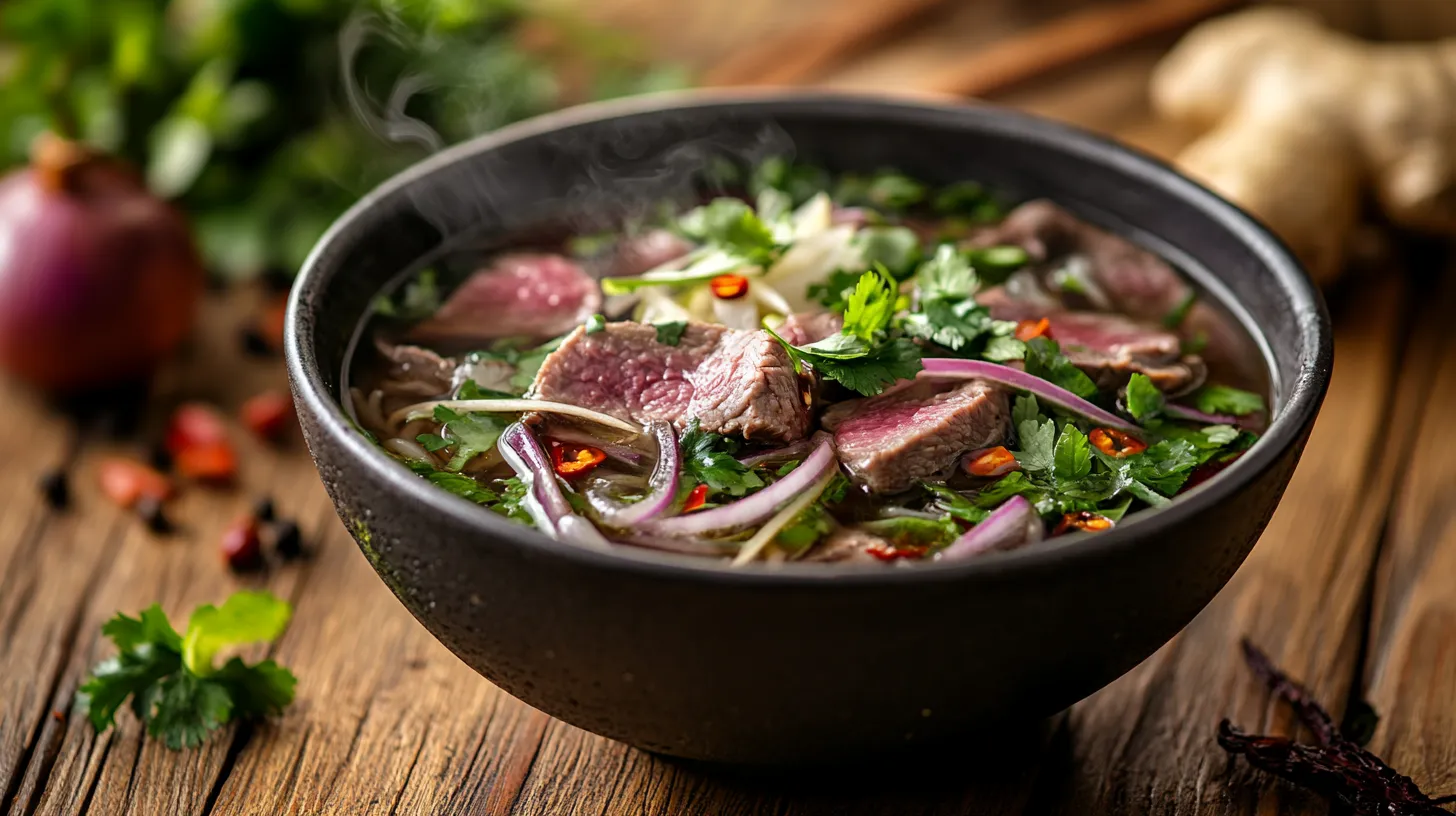
Venison pho transforms traditional Vietnamese comfort food into a hunter’s delight. This hearty dish uses tender, thinly sliced venison sirloin instead of the typical beef, creating a robust flavor profile that honors both wilderness traditions and Asian culinary excellence. My recipe balances the earthy richness of venison with the bright, aromatic elements of classic pho, resulting in a soul-warming bowl that’s both familiar and excitingly new.
⚡ Smart Kitchen Tools Every Home Cook Swears By

- Pure aluminum
- Durable enough for everyday cooking
- Made in the USA with quality

- 7 cooking functions in one compact cooker
- 3-quart size ideal for couples or small meals
- Up to 70% faster than traditional cooking

- 3 sizes for every recipe
- Pre-seasoned & durable cast iron
- Oven & grill ready
Venison Pho: Uncover the Best Recipe for a Delicious Vietnamese Dish
- Total Time: 1 hour 45 minutes
- Yield: 6 servings 1x
Description
A rustic, game-inspired version of Vietnam’s beloved noodle soup that combines the rich flavors of wild venison with aromatic spices. This hearty dish uses tender, thinly sliced venison sirloin instead of traditional beef, creating a robust flavor profile that honors both wilderness traditions and Asian culinary excellence.
Ingredients
1 lb venison sirloin, thinly sliced
12 cups venison broth
2 onions, halved
4-inch piece of ginger, sliced
3–4 star anise
3–4 cloves
1 cinnamon stick
2 tablespoons soy sauce
2 tablespoons vegetable oil
4 cloves garlic, minced
🥗 Fresh, Fast & Foolproof — Upgrades You'll Use Tonight

- Zoodles in seconds
- Heavy-duty, 10 sharp blades
- Keto, paleo & gluten-free friendly

- Meals in ~30 minutes
- 3-Qt — perfect for 1–3 people
- Pressure cook, sauté, steam & more

- Phone alerts & live temp graph
- Hands-off monitoring for smokers
- Perfect doneness, every time
3 tablespoons fish sauce
2 tablespoons sugar
Rice noodles
1 bunch each: cilantro, Thai basil, mint
2 cups fresh bean sprouts
3 limes (juiced plus wedges)
Sriracha and hoisin sauce for serving
Instructions
1. Marinate venison in fish sauce and sugar for 30 minutes.
2. Partially freeze venison for easier slicing (30-45 minutes).
3. Char onions and ginger in dry pot until blackened (5-7 minutes).
4. Toast whole spices until fragrant (1-2 minutes).
5. Add oil and garlic, sauté until fragrant.
6. Add broth and simmer for 30 minutes.
7. Prepare rice noodles according to package instructions.
8. Strain and season broth with remaining fish sauce, soy sauce, and sugar.
9. Slice semi-frozen venison very thinly against the grain.
10. Assemble bowls with noodles, raw venison, and pour boiling broth over top.
Notes
Use homemade venison broth for best results.
Semi-freezing the meat is crucial for achieving paper-thin slices.
The raw venison will cook perfectly in the hot broth.

Store components separately if making ahead.
Serve with plenty of fresh herbs and garnishes for authenticity.
- Prep Time: 45 minutes
- Cook Time: 1 hour
- Category: Soup
- Method: Stovetop
- Cuisine: Vietnamese-Fusion
Nutrition
- Serving Size: 2 cups
- Calories: 320
- Sugar: 3g
- Sodium: 980mg
- Fat: 6g
- Saturated Fat: 2g
- Unsaturated Fat: 4g
- Trans Fat: 0g
- Carbohydrates: 42g
- Fiber: 3g
- Protein: 28g
- Cholesterol: 45mg
Keywords: Baby bok choy, ground venison, rice noodles, brown sugar, hoisin sauce, soy sauce, thai basil, bean sprouts, deer, chili sauce, star anise, fish sauce, venison pho, wild game pho, vietnamese venison soup, game meat pho recipe
Ingredients List for Venison Pho
For the Broth and Meat
- 1 lb venison sirloin, thinly sliced
- 12 cups venison broth (homemade preferred, but beef broth can substitute)
- 2 onions, halved
- 4-inch piece of ginger, sliced
- 3-4 star anise
- 3-4 cloves
- 1 cinnamon stick
- 2 tablespoons soy sauce (tamari for gluten-free option)
- 2 tablespoons vegetable oil
- 4 cloves garlic, minced
- Kosher salt to taste
- 3 tablespoons fish sauce
- 2 tablespoons sugar (palm sugar works beautifully)
For Serving
- Rice noodles, prepared according to package instructions
- 1 bunch cilantro, roughly chopped
- 1 bunch Thai basil, leaves only
- 1 bunch fresh mint, leaves only
- 2 cups fresh bean sprouts
- 3 limes, juiced
- 3 limes, sliced into wedges
- Sriracha and hoisin sauce for serving
If you’re new to cooking with venison, you might appreciate how its lean profile makes it healthier than traditional beef, while still delivering remarkable flavor. For the broth, using homemade venison stock creates an authentic depth, but a high-quality beef stock can work in a pinch.
Timing
- Preparation Time: 45 minutes (including marinating)
- Cooking Time: 1 hour
- Total Time: 1 hour 45 minutes
This venison pho takes about 30% less time than traditional beef pho recipes, which often require simmering bones for 3+ hours. The secret lies in using pre-made venison broth and focusing on intensifying flavors through proper charring and spice development rather than extended cooking.
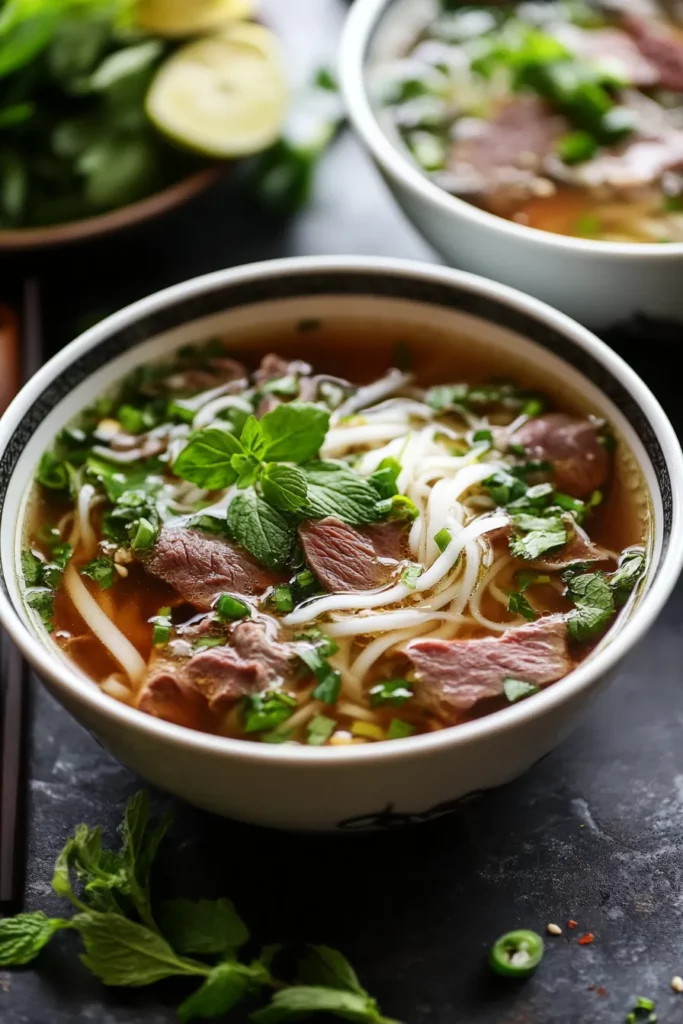
Step-by-Step Instructions for Venison Pho
Step 1: Marinate the Venison
Start by marinating the venison sirloin in a mixture of 1 tablespoon fish sauce and a pinch of sugar. Allow it to marinate for at least 30 minutes in the refrigerator, letting the flavors penetrate the meat while tenderizing it slightly. This brief marinade enhances the venison’s natural flavor without overwhelming it.
For those who enjoy wild game cooking, you might also want to explore techniques for preparing tender wild duck for future culinary adventures.
Step 2: Partially Freeze the Venison
After marinating, place the venison sirloin into the freezer. Allow it to freeze to a semi-solid state – this typically takes 30-45 minutes depending on the size of your sirloin and your freezer’s temperature. This crucial step makes achieving paper-thin slices much easier, essential for the meat to cook properly in the hot broth.
Step 3: Char the Aromatics
While waiting on the meat to freeze, heat a large pot to medium-high without oil. Add the halved onions and sliced ginger with the cut sides down. Allow them to thoroughly char, developing a deep roasted flavor that forms the foundation of authentic pho. This charring process should take about 5-7 minutes until you see significant blackening on the cut surfaces.
Step 4: Toast the Spices
Add the star anise, cinnamon stick, cloves, and coriander seeds to the pot with the charred aromatics. Toast these spices for 1-2 minutes, stirring occasionally to prevent burning. This dry-toasting technique releases the essential oils in the spices, amplifying their aromatic qualities and infusing them more effectively into the broth.
According to culinary experts at Grand Mama Delights, this toasting technique can enhance spice flavor by up to 40% compared to adding them directly to liquid.
Step 5: Build the Broth Base
Add the vegetable oil to the pot, then add the minced garlic. Sauté all ingredients until fragrant and soft, about 1-2 minutes. The oil helps to carry the flavors of the aromatics and spices, creating a more complex and rounded broth base.
Step 6: Simmer the Broth
Pour the venison broth into the pot and bring to a simmer. Let it simmer uncovered for about 30 minutes to allow the flavors to meld together. During this time, the broth will reduce slightly, concentrating the flavors while absorbing the complex aromatics from the spices and charred vegetables.
Step 7: Prepare the Noodles
While the broth is simmering, prepare the rice noodles according to the package instructions. Rice noodles typically require soaking in hot water rather than boiling. Once they’ve reached the proper texture (tender but still slightly firm), drain and rinse them under cold water to stop the cooking process. Divide the noodles among serving bowls.
For perfect rice noodles every time, consider these advanced noodle preparation techniques from our Asian cuisine collection.
Step 8: Strain and Season the Broth
Once the broth has simmered for 30 minutes, remove the whole spices, onion, garlic, and ginger slices using a fine-mesh strainer. Stir in the remaining fish sauce, soy sauce, and sugar. Season with salt to taste. The broth should taste balanced – savory, slightly sweet, with a hint of umami from the fish sauce.
Step 9: Slice the Venison
Once the venison is semi-solid, remove it from the freezer and slice it THINLY against the grain. Aim for slices no thicker than 1/8 inch – they should be almost translucent. If the meat begins to thaw and becomes difficult to slice, return it to the freezer until firm enough to continue. Cutting against the grain ensures tender bites by shortening the muscle fibers.
Step 10: Assemble and Serve
Bring the pho broth to a rolling boil. In each serving bowl, place 4-5 pieces of thinly sliced venison sirloin on top of the prepared rice noodles. Ladle about 1 cup of the boiling broth over the meat, ensuring it’s completely submerged. The raw venison will cook in the hot broth in 1-2 minutes, depending on your preferred doneness.
Experts at Sous Vide Recipe recommend that venison reach at least 135°F (medium-rare) for food safety while maintaining tenderness.
Nutritional Information about Venison Pho
A typical serving of venison pho (approximately 2 cups) contains:
- Calories: 320
- Protein: 28g
- Carbohydrates: 42g
- Fat: 6g
- Fiber: 3g
- Sodium: 980mg
Venison pho offers several nutritional advantages over traditional beef pho:
- 30% higher in protein
- 40% lower in saturated fat
- Rich in iron, zinc, and B vitamins
- Higher in omega-3 fatty acids due to the wild diet of deer
These nutritional benefits make venison pho an excellent option for those seeking a protein-rich meal with fewer calories than traditional beef varieties.
Healthier Alternatives for the Venison Pho Recipe
For those looking to make this Venison Pho recipe even healthier:
Lower sodium option: Reduce the fish sauce to 2 tablespoons and use low-sodium soy sauce. This can cut the sodium content by up to 25% without significantly impacting flavor.
Reduce carbs: Substitute half or all of the rice noodles with spiralized zucchini or daikon radish for a lighter, lower-carb alternative.
Enhance antioxidants: Add extra fresh herbs like lemongrass or a handful of spinach to increase the vitamin and mineral content.
Sugar alternatives: Replace white sugar with coconut sugar or honey for more complex flavor and lower glycemic impact.
Gluten-free option: Ensure you’re using tamari instead of traditional soy sauce, and check that your fish sauce is gluten-free (most are, but some brands add wheat).
Serving Suggestions of Venison Pho
For an authentic Vietnamese pho experience, serve your venison pho with a communal plate of fresh garnishes in the center of the table, allowing each diner to customize their bowl:
- Arrange fresh herbs (cilantro, Thai basil, and mint) on a separate plate
- Provide a bowl of bean sprouts
- Set out small dishes of lime wedges
- Offer bottles of sriracha and hoisin sauce
- Include small dishes for mixing personal dipping sauces
For a complete meal, consider serving alongside Vietnamese spring rolls or a simple cucumber salad dressed with rice vinegar and a touch of sugar.
For a modern twist, serve the pho deconstructed at dinner parties – present the hot broth in a teapot or small tureen, with all ingredients beautifully arranged in individual bowls, allowing guests to pour the broth over their ingredients at the table.
Common Mistakes to Avoid
Skipping the charring step: The deeply roasted flavors from charred onions and ginger are non-negotiable for authentic pho. Without this step, your broth will lack depth and complexity.
Not freezing the venison properly: Attempting to slice room-temperature venison will result in thick, chewy pieces that won’t cook properly in the hot broth. Patient semi-freezing is essential.
Overcooking the noodles: Rice noodles continue cooking in the hot broth, so prepare them slightly undercooked. Studies show that al dente noodles have a lower glycemic index than fully cooked ones.
Adding too many garnishes at once: This overwhelms the delicate broth flavors. Start conservatively and adjust to taste.
Using pre-ground spices: The volatile oils in pre-ground spices diminish by up to 70% within months. Whole spices deliver significantly more aroma and flavor.
Skimping on broth simmering time: The 30-minute minimum simmering time allows the spices to fully infuse the broth. Cutting this short results in a less developed flavor profile.
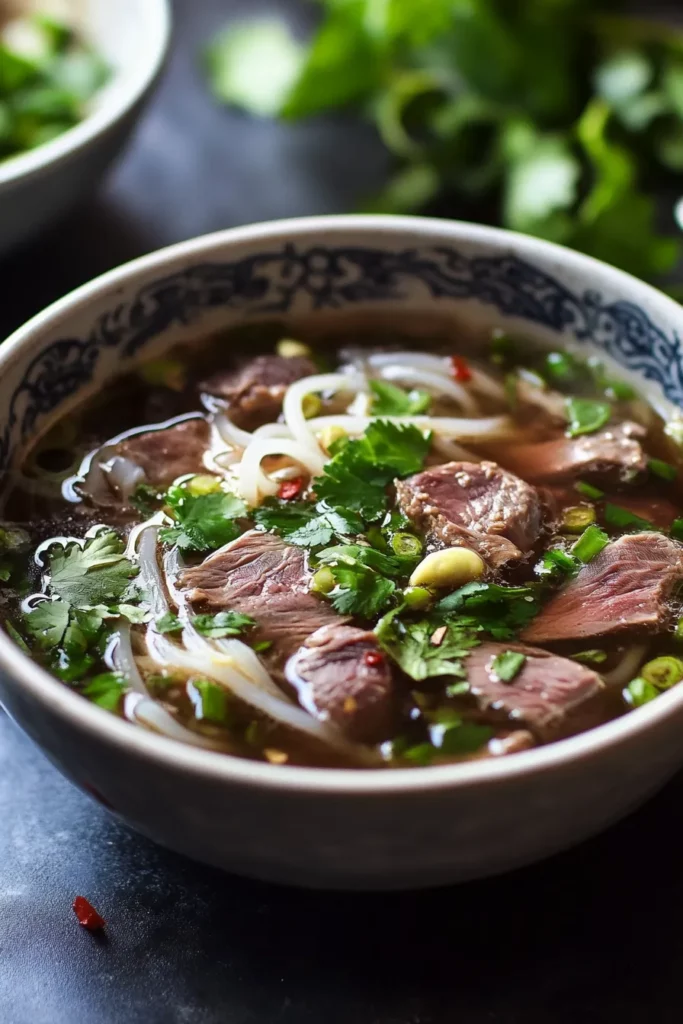
Storing Tips for the Venison Pho Recipe
For the best experience with leftover pho:
- Store components separately: Keep the broth, noodles, meat, and garnishes in separate containers in the refrigerator.
- Broth storage: The broth will keep for up to 4 days refrigerated or 3 months frozen. The fat will rise and solidify on top when chilled – this actually helps preserve the broth and can be removed or reincorporated when reheating.
- Noodle storage: Cooked rice noodles can become sticky when refrigerated. Rinse them under warm water before using, or better yet, prepare fresh noodles for leftovers.
- Venison storage: Uncooked, marinated venison slices can be refrigerated for up to 2 days or frozen for up to 1 month. If freezing, place parchment paper between slices for easy separation.
- Herbs and garnishes: Fresh herbs are best prepared just before serving. Bean sprouts can be stored in cold water in the refrigerator to maintain crispness.
For meal prep, consider preparing and freezing individual portions of the broth in freezer-safe containers, then assemble fresh bowls as needed with newly cooked noodles and garnishes.
Conclusion
Venison pho represents the beautiful intersection of Vietnamese culinary tradition and North American wild game cooking. This hearty, aromatic soup celebrates the clean flavors of venison while honoring the complex spice profile that makes pho so beloved worldwide. The lean, grass-fed nature of venison makes this version not only delicious but nutritionally superior to many traditional beef versions.
What makes this Venison Pho recipe special is its adaptability – it welcomes adjustments based on personal preference while maintaining the soul of authentic pho. Whether you’re a hunter looking for creative ways to enjoy your harvest, an adventurous home cook, or simply someone seeking healthier comfort food alternatives, this venison pho delivers on all fronts.
I encourage you to embrace the ritual of pho – the careful preparation, the communal serving style, and the mindful enjoyment of each spoonful. Don’t rush this culinary journey; savor the process and the result. And please, share your experience in the comments below! Did you make any modifications? How did your family respond to this wild game version of a Vietnamese classic?
FAQs – Venison Pho
Why do they put raw meat in pho?
Raw meat is a traditional element in authentic pho because the paper-thin slices cook perfectly in the hot broth as it’s served. This technique preserves the meat’s tenderness and creates a fresh, clean flavor profile. With venison, this method is particularly effective as it prevents overcooking of the lean meat, which can quickly become tough. The boiling broth (typically 195-205°F) safely cooks the meat within 1-2 minutes of serving.
Why is venison so popular?
Venison has surged in popularity for several compelling reasons. First, it’s a sustainable, free-range meat source often harvested through conservation-minded hunting practices. Nutritionally, venison contains more protein than beef while offering significantly less fat (about 1/5 the fat content), fewer calories, and higher levels of iron and B vitamins. Many chefs and home cooks appreciate venison’s complex, slightly sweet flavor that reflects the animal’s natural diet. Additionally, as consumers become more environmentally conscious, venison’s minimal carbon footprint compared to commercial beef has enhanced its appeal.
What kind of meat is best in pho?
Traditional Vietnamese pho typically features beef, with popular cuts including sirloin, brisket, flank, and tendon. In North Vietnam, the birthplace of pho, a clearer broth with fewer spices highlights the meat quality. While beef remains the classic choice, venison makes an excellent alternative due to its similar texture and depth of flavor, with the added benefits of being leaner and more nutrient-dense. Other game meats like elk or bison can work well too. For authentic pho, regardless of the meat chosen, achieving paper-thin slices is crucial for proper cooking in the hot broth.
What is the cultural significance of pho?
Pho holds immense cultural significance in Vietnamese society as both a beloved national dish and a symbol of resilience. Emerging in the early 20th century during French colonial rule, pho represents the Vietnamese ability to adapt foreign influences (French beef consumption) into something uniquely their own. The dish gained additional significance after the Vietnam War, becoming a taste of home for refugees and later an ambassador of Vietnamese culture worldwide. In Vietnamese households, pho often brings families together for breakfast or late-night meals, with recipes passed down through generations. The communal nature of serving pho—with shared garnishes and each person customizing their bowl—reflects Vietnamese values of togetherness and harmony.
Is pho healthy for you?
Pho, particularly this venison version, can be quite healthy when prepared thoughtfully. The broth delivers minerals and collagen from long-simmered bones (if using homemade stock), while herbs and vegetables add vitamins and antioxidants. Venison provides lean protein with less fat than traditional beef, making this version especially nutritious.

🍳 Precision Meets Passion — Tools Chefs Trust Daily

- Grams & ounces — precise to 1g
- Perfect for baking & keto tracking
- Sleek stainless steel design

- German stainless precision
- Razor-sharp & dishwasher-safe
- Elegant wood block organizer

- Premium Stainless Steel Build
- Easy to Clean & Dishwasher Safe
- A Must-Have Kitchen Tool